
Strategy & Strategic Planning
Strategic planning is an essential business process for health and human service provider organizations. A strategic plan provides clarity and transparency from the board on performance expectations and priorities and serves as the overall foundation for organizational infrastructure development and operating plans. However, strategy is only one factor of the overall strategic planning process. Rather, strategy and strategic planning require a scenario-based, tactical, and detailed implementation and execution plan with the right management team and performance metrics to ensure the organization is progressing toward its strategic initiatives. Amid changing reimbursement models, consumerism, and other market disruptors, a strategic plan that is both market-focused and nimble is key for sustainability in an uncertain future.
Editor’s Picks
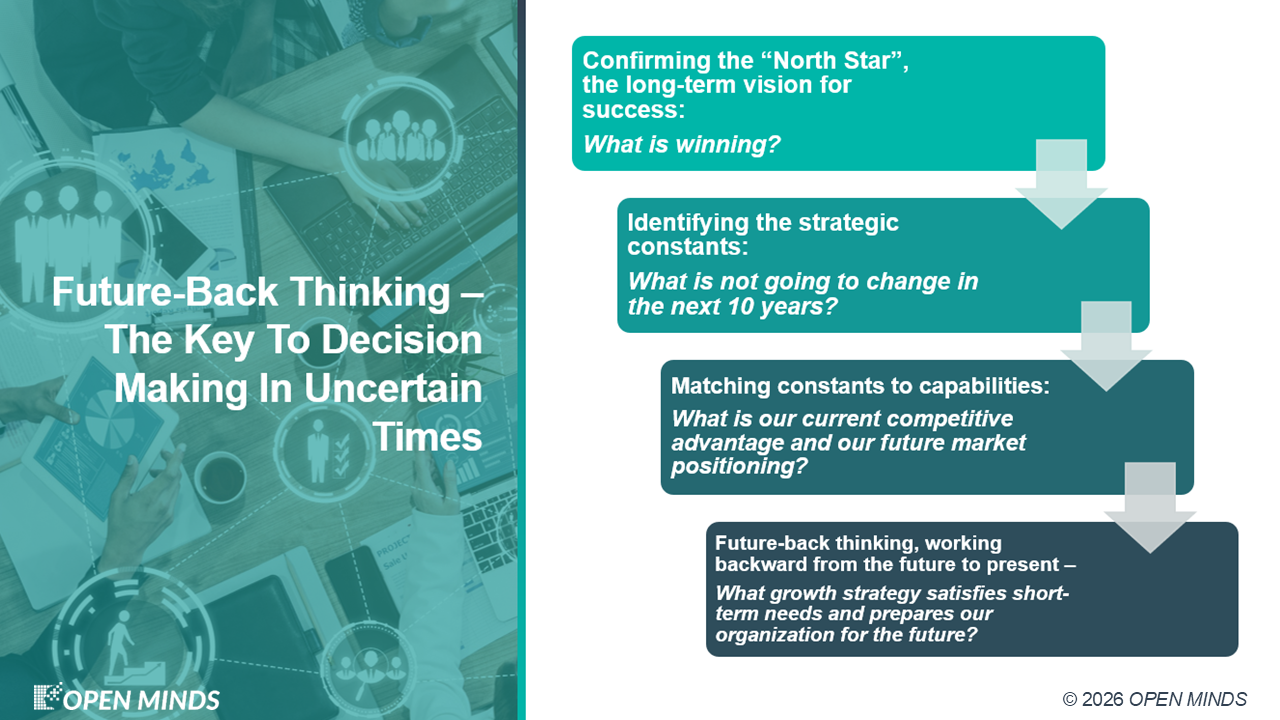 Uncertainty As The Constant
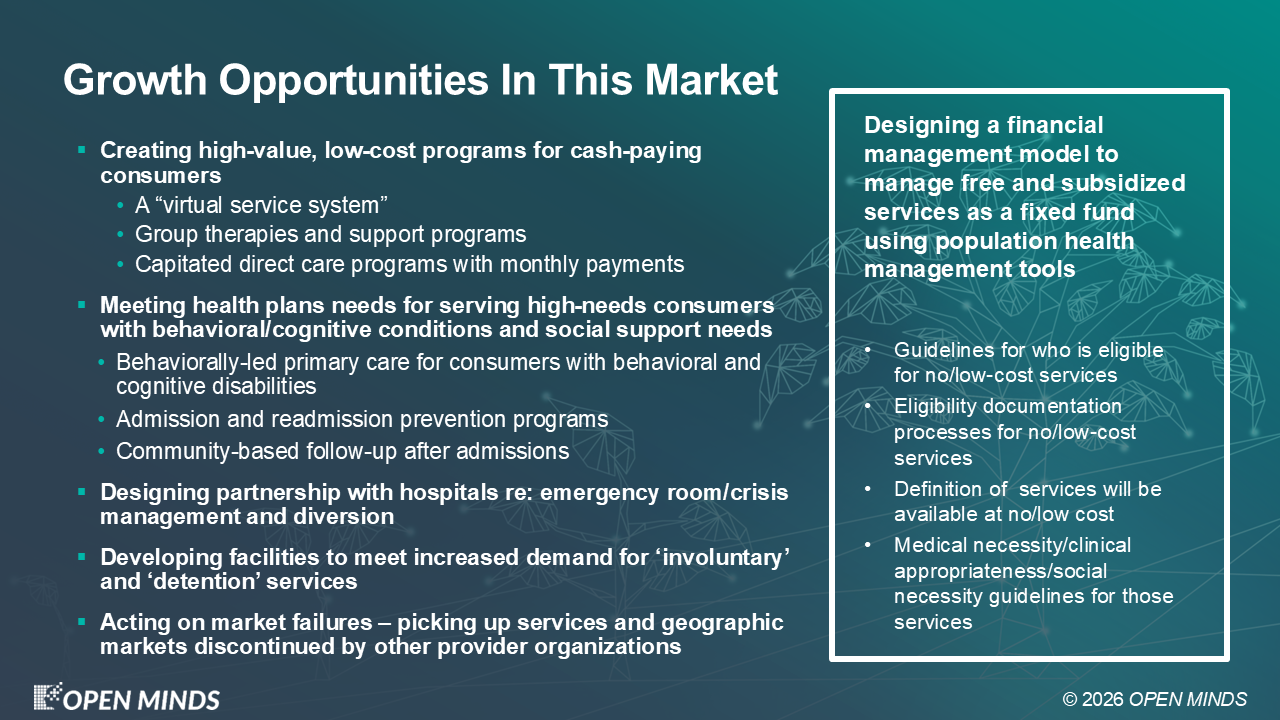 Hedging Your Bets
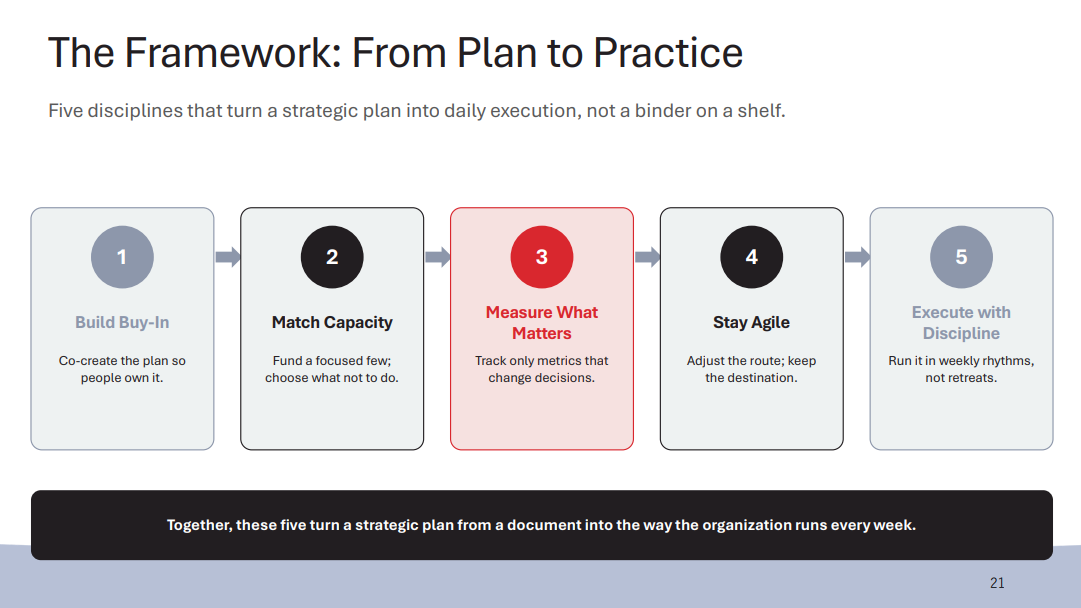 Is Your Plan A Block Of Paper?
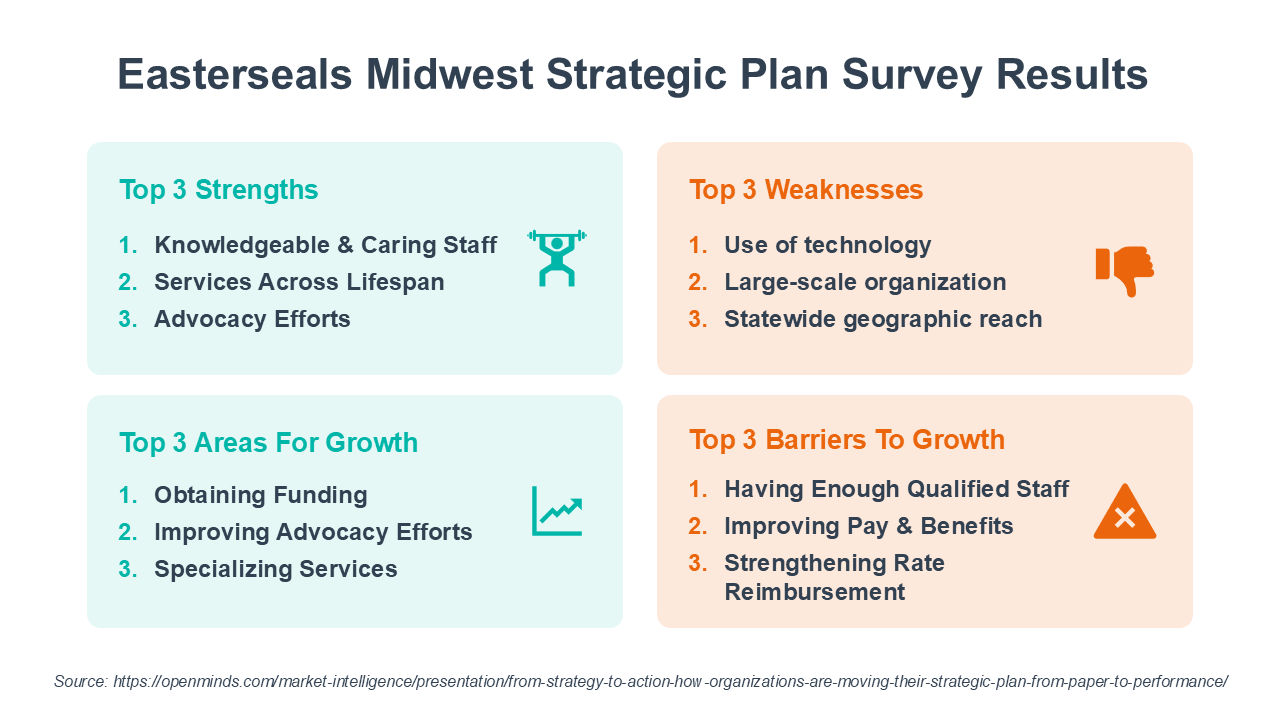 What’s The Plan?
Latest Resources
- Configuring Your EHR To Optimize Quality Data: Building the Foundation for Better Insights
- Building Cultures Of High Reliability: Lessons From The High Reliability Organization Paradigm
- High Reliability
- The $18.6 Billion Bump: Best Of The 2026 OPEN MINDS Service Excellence Institute
- Quality As Strategy
- State & Local Strategies For The Next Decade: Building Age-Ready Systems of Care
- Integrated Supports For Dual-Diagnosis: The Convergence of Mental Health & I/DD Services
- Integrated Behavioral Health In Action: Lessons From Kaiser Permanente’s Whole Person Care Model
- Beyond The Launch: Embedding Behavioral Health In Emergency Departments
- Portfolio Management To Optimize Organizational Performance: The 2026 OPEN MINDS Executive Seminar On How To Build A Service Line Portfolio For The Future
- Is Your Plan A Block Of Paper?
- What’s The Plan?
- How To Make $50 Billion Matter
- Who’s Paying The Tab? The Best Of The 2026 OPEN MINDS Government Health & Human Services Executive Summit
- The Future Of Smart Living: Technology As The Foundation For I/DD Services With Brian Hart, Founder & Chief Executive Officer Of ShiftAbility
- It’s The Planning
- Improving Patient Experience To Improve Financial Performance: A Discussion With Warren Bates, Chief Executive Officer Of Mend
- Correcting The Mistakes That Undermine Strategy Execution: The Adelphoi Case Study
- Managing Permacrisis: Best Of The 2026 OPEN MINDS Strategy & Innovation Institute
- Sustaining Independence – The Financial Future Of Nonprofit Behavioral Health Organizations: A Discussion With Bruce White, Chief Executive Officer Of Johnson, Kendall, & Johnson
To sign-up for monthly Strategy & Strategic Planning alerts, you must be signed in to your account.

Latest Industry News
- AMA Sued To Make CPT Billing Codes Freely Available
- Kentucky Clarifies County Jail & State Payment Responsibilities For Prisoner Medical Care
- Sword Health To Acquire Headspace
- New Jersey Restores $16.45 Million In Funding For Five Crisis Centers
- Los Angeles County Approves $3 Million For 12-Home Foster Care Village Designed To Keep Siblings Together